The e-commerce market is constantly shifting, and buyer demands are also increasing. Therefore, in 2025, the pressure is on for businesses of all sizes to rethink their e-commerce strategy. In 2024, global retail e-commerce sales were $4.1 trillion, expected to reach around $6.4 trillion by the end of 2029. As technology continues to advance and consumer expectations evolve, retailers must be prepared to adapt.
In 2025, brands must be ready to adapt hyper-personalized shopping experience and flexible payment options, and much more that makes people forget about the competition. However, to do this, brands must have an in-depth understanding of the e-commerce industry trends and buying behaviours that are shaping e-commerce.
With that in mind, in this blog, we will cover the top e-commerce development trends in 2025.
AI-Driven Perosnalization
In 2024, AI was everywhere. It has suddenly popped up in every corner of the world. Specifically, Generative AI has integrated itself into our daily lives. As per the research, the e-commerce market is expected to reach a CGPR of 15.5%. As AI shifted from the backstage to the mainstream, in 2025, it will be a pillar of successful e-commerce storefront strategies. Brands will use AI to improve their e-commerce personalization efforts in 2025.
Social commerce and real-time buying recommendations
- Improve product searches with images
- Boost the return process
- Product suggestions and customer service using chatbots
- Implement business-to-agent commerce
Create Data Security and Transparency With Blockchain
As online shopping continues to grow, concerns about data security, fraud, and trust between buyers and sellers also increase. Here is where blockchain technology is helpful. As per Statista research, the global blockchain technology market will reach over $943 billion by 2032. It shows its rapid adoption across industries. It helps improve transaction security, prevents fraud, and enhances transparency in online shopping.
Blockchain lets customers verify product authenticity, track orders in real-time, and safeguard their personal data. It will help create a safer and more trustworthy e-commerce experience. As businesses prioritizes data security and privacy, blockchain will play an important role in the e-comerce future.
Livestream and Social Shopping
Social commerce and livestream shopping is all set to dominate the e-commerce industry in 2025. It merges the convenience of online shopping with the interactive social media nature. Platforms such as Instagram, TikTok, and Pinterest are offering a comprehensive buying experience where users can find, explore, and purchase products directly within their feeds. As per the study, the social commerce sales will reach $6.2 trillion by 2030.
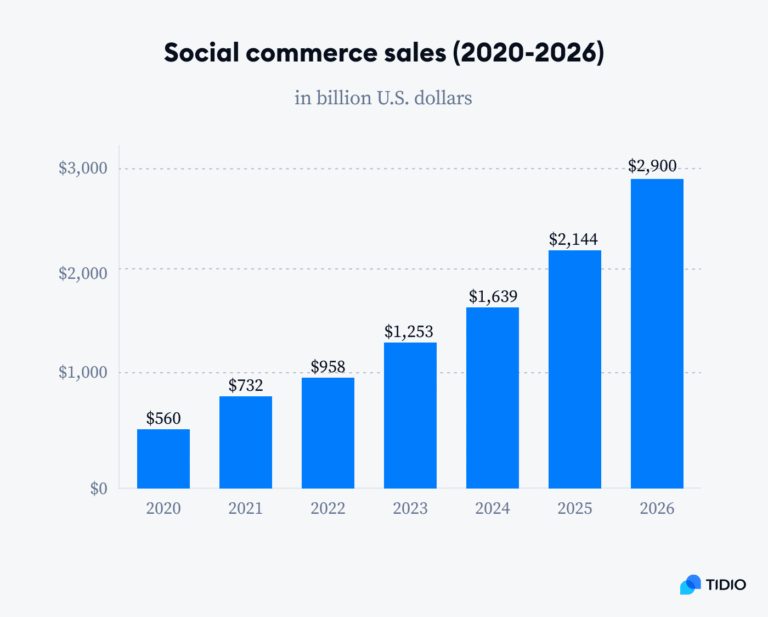
Source: Influencer Marketing Hub
As social media and e-commerce continue to converge, brands tap into livestream shopping to showcase products in action, engage the audience, and drive instant sales. Retailers are also finding livestreaming successful because of the real-time engagement it brings. As customers are craving for more immersive and authentic shopping experiences, livestream commerce will become the major revenue driver in 2025. It will transform how brands connect with and convert shoppers online.
AR and VR Bringing E-Commerce to Life
Do you know what the greatest challenge of shopping online is? You can’t see, touch, or fully experience a product in person before buying. Here is where Augmented Reality and Virtual Reality help. As per the research done by eMarketer, the number of AR users in the US will cross over 100 million by the end of 2025.
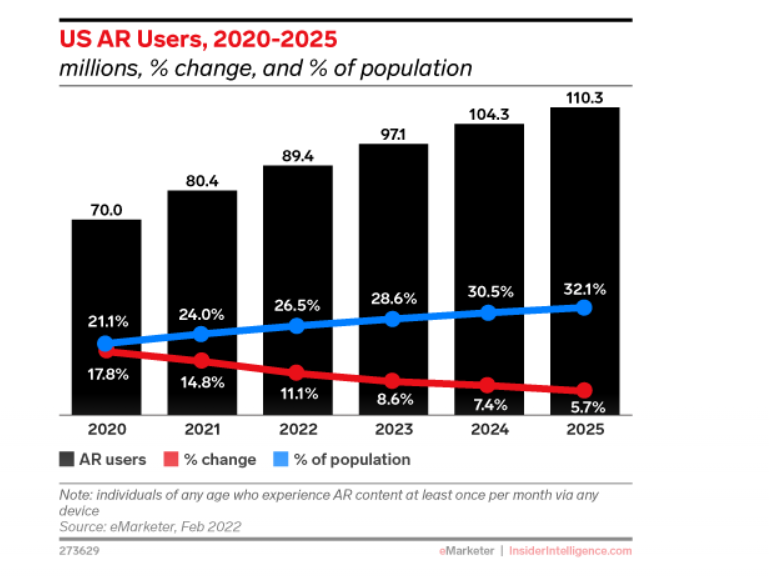
It will continue revolutionizing the online shopping experience by bridging the gap between the digital and physical worlds. If used properly, AR and VR can help reduce return rates, which will boost customer confidence in their buying decisions.
Conversational Commerce and Voice Commerce
Approximately 75% of US households own a smart speaker. Therefore, it is no surprise that voice search will become an up-and-coming trend in the e-commerce space. Alexa and Google Assistants let users search products, make purchases, and track deliveries using voice commands. However, with recent advancements in natural language capabilities, more e-commerce platforms are optimizing for voice search. It gives customers a hands-free and convenient way to shop. So, in 2025, we can expect more customers saying “Hey, Siri” or “Hey, Alexa” when they’re shopping online.
AI Agent for E-Commerce and Retail
AI bots use a massive amount of data to learn about customer behavior, purchase history, customer needs, and search history. They use this data to build personalized buying experiences for each user. AI agents can provide intelligent recommendations. They use Machine Learning algorithms to identify patterns and customer interactions, and based on them, recommend the ideal product to the customers as per their choices and interests. In e-commerce industry, product prices could be changed for many reasons. It includes real-time market conditions, product demand, competitor pricing, etc. These agents would assess pricing information and market trends to make Informed pricing decisions and optimize the overall profit.
Other than all these flexible payment options, mobile commerce, subscription e-commerce model, and sustainable online shopping are also the top-notch e-commerce development trends to watch in 2025.
Epilogue
Gone are the days of “good enough.” In e-commerce industry, competition is increasing, and social media is allowing both small and big brands to stand out from the crowd. So, the simple lesson to learn here is: If you’re not getting ahead, you’re falling behind. So, keep up with these e-commerce development trends in 2025 to stay relevant and drive reliable revenue. If you need the help of a skilled and season e-commerce web development company in India, connect with us today. We offer end-to-end e-commerce development services from your Shopify store’s theme design, customization, app development and integration to migration and support and maintenance.
Frequently Asked Questions
What are the top e-commerce development trends in 2025?
AI-driven personalization, blockchain for security, livestream shopping, AR/VR integration, and conversational commerce are leading the way.
How is AI transforming the e-commerce experience in 2025?
AI enhances product recommendations, personalizes shopping, powers chatbots, and helps brands offer real-time buying suggestions.
Why is blockchain important for e-commerce?
Blockchain ensures secure transactions, prevents fraud, and builds customer trust with transparency and data protection.
What is livestream shopping, and why is it trending?
Livestream shopping combines social engagement with instant purchases, offering customers a more immersive and interactive buying experience.
How are AR and VR shaping the future of online shopping?
AR and VR let users virtually try products before buying, increasing confidence and reducing returns.